A business operating system isn’t the software. It’s how the organisation works.
Off-the-shelf apps are overkill, or not specific enough for your business. We start with how your people actually work, then build the system around it.
What is a business operating system?
A business operating system is how your business actually runs: the decisions, rules, handovers and know-how, and the way your people use them every day.
Every business has the same parts: tools, meetings, business systems. How your people actually use them is different in every business, because the people are different.
So no two are the same. The structure underneath can be. The shape on top can’t.
Why the apps never quite fit
You have probably been shown one already. Monday, Notion, ClickUp, Basecamp. Good tools. Built for everyone, which means built for no one in particular.
So you get features nobody uses, and more setup than actual doing. And you end up bending how you work to fit the software.
We do it the other way round. We start with how your business runs, then fit the tools to it. Often the ones you already pay for. Then the system checks its own rules, so it stays fitted.
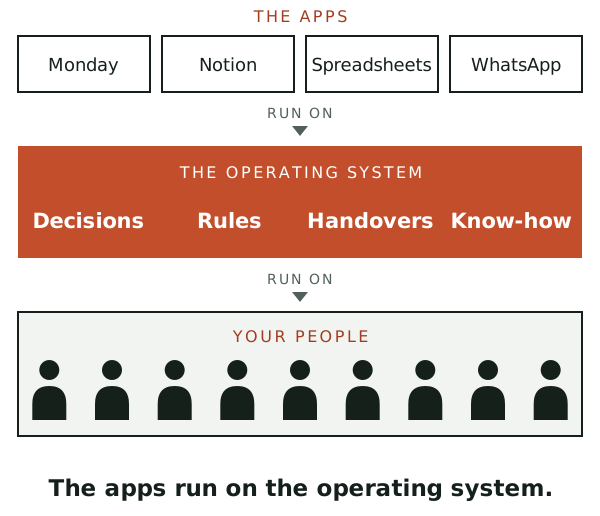
What is inside one? Here is ours.
Before we built one for anyone else, we built one for this business. It runs every day.
-
01
Decisions
A decision made on a call goes into a log the same day: what was decided, and why. Nobody re-argues it next month.
-
02
Rules that enforce themselves
A rule that keeps getting broken becomes a guardrail. The system catches the mistake, not a person.
-
03
Nothing chased by memory
Every follow-up carries a date. When the date passes, the system raises it until it is dealt with.
Yours would have your decisions, your rules, your people. The same structure underneath.
Signs yours needs work
- The answers live in one or two heads. Everyone else waits.
- Things get followed up only when someone remembers.
- New people take months to get up to speed, because how it works was never written down.
- Your suppliers and subcontractors each know a piece. Nobody holds the whole picture but you.
- You have tried AI. It was generic, because it knows nothing about your business.
What is key person risk?“Without her, it wouldn’t work. The business would fail.”
An owner, on the one person who keeps the back office running.
Two or more sound familiar? Find out what yours is missing.
10 questions about how your business really runs. In 3 minutes you will see where it depends on one person, what is straining, and what is holding.
Questions people ask
- Is a business operating system software?
- No. Software can run part of one. The operating system is how the business works: the decisions, the rules, the handovers. We build it into tools your team can see and use.
- What is an example of a business operating system?
- Every business has one, written down or not. Ours is above: decisions logged, rules enforced, follow-ups dated. What goes into yours depends on how your business runs.
- How do you create a business operating system?
- Three steps, in order. Get it out of people’s heads and into one place. Write down the rules that keep it true, and make the system check them. Then let your team, and AI, run the work on top. We call it Read Rules Run.
- How does AI fit into a business operating system?
- On top, and last. AI fails when there is nothing underneath it: no single source of truth, no rules. Build those first and AI does real work, bound by your rules.
- Is a business operating system for startups?
- Ours is not. It is built for established, owner-led businesses that already work and have outgrown how they run. A startup still finding its market changes too fast to systemise.