Key person risk: if the business can’t run without you, a buyer pays less for it.
The fix isn’t a second you. It’s a system that holds what you hold.
What is key person risk?
Key person risk is how much a business depends on one person. They leave. They get ill. They stop. What stops with them?
Key man risk. Key person dependency. Same risk, three names.
It’s the owner. Or it’s the one person in the back office everybody rings.
How a buyer prices key person risk
In due diligence a buyer asks one question. Over and over, in different words. Who else runs this? If the answer is nobody, it shows up in the price. Four ways.
-
01
A lower multiple
Same profit. Smaller multiple. Less money.
-
02
A key person discount
The valuer takes a slice off. The slice is the risk that it all falters without you.
-
03
An earn-out
Part of the price is held back. You get it only if the business performs after you’ve gone.
-
04
Staying on
You’re tied in after the sale. A year. Two. Handing over what only you know.
It isn’t automatic. One thing moves the price: can a buyer see the business run without you? That, you can change.
Insurance, succession and a system do different jobs
-
01
Key person insurance
Pays out if the person dies or can’t work. Protects the money.
-
02
Succession planning and cross-training
Puts a second person in line. Teaches them the role. Two heads, not one.
-
03
An operating system
Takes what’s in the head and puts it in the business. No single head required.
Use all three if you need them. Only the third changes what a buyer sees.
The fix: a system that holds what you hold
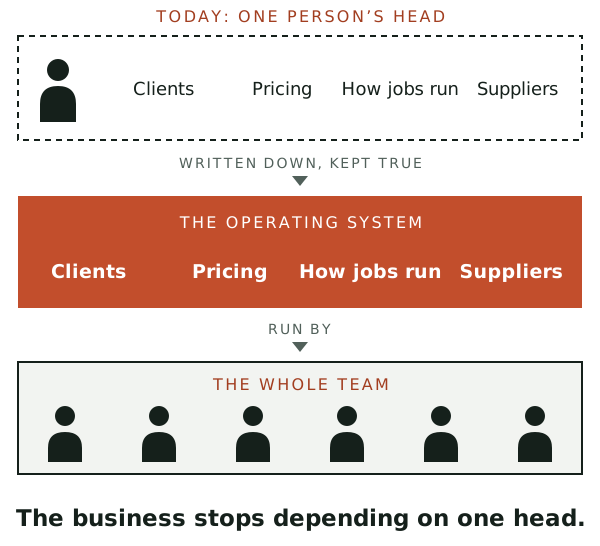
An operating system for the business. Not software. How the work runs. Written down. Kept true. So you don’t have to carry it.
-
01
Know-how, written down
What you know goes where the work happens. Not in your head. Not in your inbox.
-
02
The same playbook, every time
A job runs the same way, whoever picks it up. Nobody rings you to ask.
-
03
Decisions with their reasons
Every decision logged, with why. The business acts on it. You don’t need to be in the room.
It pays long before any sale
So you never sell. Fine. The risk is still there. Every day.
- You’re ill for a month. What stops?
- You take two weeks off. Who rings you on day two?
- Your best person hands in their notice. What walks out the door with them?
- Work doubles. Does your day double with it?
“Without her, it wouldn’t work. The business would fail.”
An owner, on the one person who keeps the back office running.
Here is ours
This business is one person. Me. So I built the system on myself first.
- Every decision goes in a log the same day. With the reason. Nobody has to ask me why.
- Every follow-up has a date. When the date passes, the system chases it. Not my memory.
- A rule I keep breaking becomes a check the system runs on its own.
Signs you carry key person risk
- Clients ask for you by name. Only you will do.
- Your supplier and subcontractor relationships live in your phone. Nobody else has them.
- Pricing, quoting, the hard calls. They all wait for you.
- One person on the team holds a piece nobody else could pick up.
- Nobody could walk through a job end to end. Except you.
- You haven’t had a week off without checking in.
Two or more sound familiar? Score your key person risk.
10 questions on how your business really runs. 3 minutes. You’ll see where it hangs on one person, and what holds without them.
Questions people ask
- What is key man risk?
- Same thing, older name. Also called key person dependency. The risk that a business falters when one person leaves, gets ill or stops.
- What is a key person discount?
- A cut a valuer applies when a business leans hard on one person. It isn’t automatic. It turns on one question: can a buyer see the business run without them?
- How do you mitigate key person risk?
- Move what the person holds into the business. Write down how the work runs. Set the rules that keep it true. Let the team run it without asking. Insurance and succession planning sit alongside.
- Is key person risk insurance enough?
- It protects the money if the person goes. It doesn’t keep the work running. Different jobs. Carry both if you need both.
- Is there a key person risk assessment template?
- The Scorecard does the job. 10 questions on where your business hangs on one person, and how hard. Free. 3 minutes.